

AI Predicts Behaviour of Quantum Systems
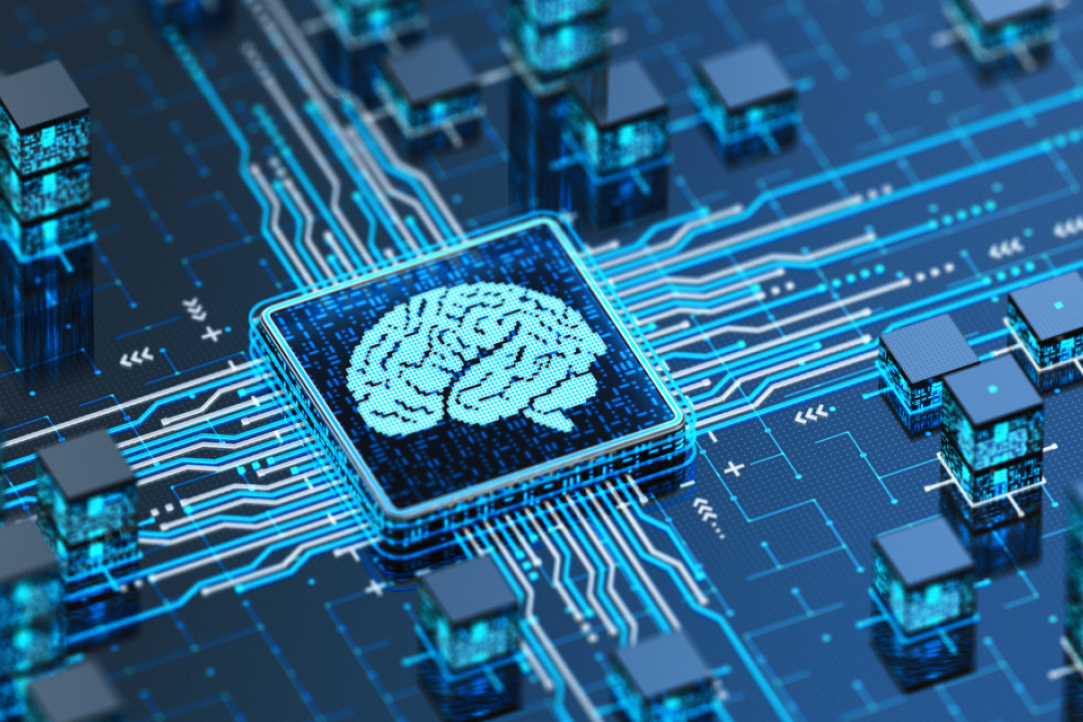
Scientists from HSE University, in collaboration with researchers from the University of Southern California, have developed an algorithm that rapidly and accurately predicts the behaviour of quantum systems, from quantum computers to solar panels. This methodology enabled the simulation of processes in the MoS₂ semiconductor and revealed that the movement of charged particles is influenced not only by the number of defects but also by their location. These defects can either slow down or accelerate charge transport, leading to effects that were previously difficult to account for with standard methods. The study has been published in Proceedings of the National Academy of Sciences (PNAS).
Modern electronics rely on quantum effects. Devices such as semiconductors, LEDs, and solar panels all depend on the behaviour of electrons in materials. Accurately describing these processes is challenging, as their simulation demands immense computing power. Simulating the motion of electrons in a material with thousands of atoms requires supercomputers to perform millions of calculations.
Typically, quantum systems are modelled using the molecular dynamics method, which enables predictions of how atoms and electrons will move over time. However, when electron states change rapidly, standard modelling methods become excessively resource intensive.
Researchers at MIEM HSE solved this problem by leveraging machine learning. The new algorithm analyses small fragments of the material, learns from their local properties, and then predicts the behaviour of the entire system. The scientists studied the two-dimensional semiconductor molybdenum disulfide (MoS₂), a promising material for optoelectronics and photovoltaics. In particular, it can function as the active layer in solar cells. Ideally, molybdenum (Mo) and sulphur (S) atoms form an ordered lattice, but in real materials, the structure is rarely perfect, as defects may occur. Defects are disruptions in the arrangement of atoms. In MoS₂, defects can manifest as vacancies (the absence of sulphur or molybdenum atoms), excess atoms between layers, local displacements, or other deviations from the ideal lattice. Defects can alter the behaviour of electrons: in some cases, they may impair conductivity, while in others, they can impart new properties to the material, such as increasing its sensitivity to light or its ability to conduct charge.
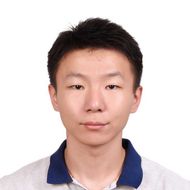
Dongyu Liu
'To understand how defects impact electron movement, we focused on small fragments of the material. The algorithm first analysed the local properties of the system and then predicted the behaviour of the entire structure. It’s similar to learning a language: first, you memorise individual words, and then you begin to understand whole sentences,' says Dongyu Liu, Assistant Professor at MIEM HSE.
It turns out that not only does the number of defects matter, but also their location. Defects can either delay or accelerate the movement of charged particles, creating traps for charge carriers within the semiconductor's band gap. Standard methods struggle to calculate these effects accurately, as the calculations must account for interactions both between defects and with the atoms of the material, which is difficult when using small computational cells. Machine learning helps overcome these dimensional limitations and account for the synergistic effects of multiple defects in the material.
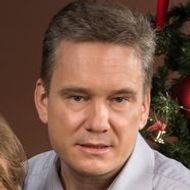
Andrey Vasenko
'Importantly, this method not only speeds up calculations but also facilitates the study of real quantum systems,' explains Andrey Vasenko, Professor at MIEM HSE. 'The results of our research will help bridge the gap between theoretical modelling and experimental studies of materials. We have developed a new approach to studying charge motion in complex systems by combining high-precision computing, molecular dynamics, and machine learning. This method will help investigate materials in which electrons carry energy and information. This is crucial for electronics and energy production.'
See also:

Scientists Test Asymmetry Between Matter and Antimatter
An international team, including scientists from HSE University, has collected and analysed data from dozens of experiments on charm mixing—the process in which an unstable charm meson oscillates between its particle and antiparticle states. These oscillations were observed only four times per thousand decays, fully consistent with the predictions of the Standard Model. This indicates that no signs of new physics have yet been detected in these processes, and if unknown particles do exist, they are likely too heavy to be observed with current equipment. The paper has been published in Physical Review D.
HSE Scientists Reveal What Drives Public Trust in Science
Researchers at HSE ISSEK have analysed the level of trust in scientific knowledge in Russian society and the factors shaping attitudes and perceptions. It was found that trust in science depends more on everyday experience, social expectations, and the perceived promises of science than on objective knowledge. The article has been published in Universe of Russia.
Scientists Uncover Why Consumers Are Reluctant to Pay for Sugar-Free Products
Researchers at the HSE Institute for Cognitive Neuroscience have investigated how 'sugar-free' labelling affects consumers’ willingness to pay for such products. It was found that the label has little impact on the products’ appeal due to a trade-off between sweetness and healthiness: on the one hand, the label can deter consumers by implying an inferior taste, while on the other, it signals potential health benefits. The study findings have been published in Frontiers in Nutrition.
Final of International Yandex–HSE Olympiad in AI and Data Analysis Held at HSE University
Yandex Education and the HSE Faculty of Computer Science have announced the results of the international AIDAO (Artificial Intelligence and Data Analysis Olympiad) competition. Students from 14 countries took part. For the second year in a row, first place went to the team AI Capybara, which developed the most accurate AI model for an autonomous vehicle vision system.
AI Lingua Included in Compilation of Best International AI Practices in Higher Education
HSE University has been acknowledged internationally for its pioneering efforts in integrating artificial intelligence into higher education. The AI Lingua Neural Network developed at HSE was included in the renowned international collection ‘The Global Development of AI-Empowered Higher Education: Beyond the Horizon.’ The compilation was prepared by the Institute of Education (IOE) of Tsinghua University with the support of the Ministry of Education of the People's Republic of China and a global advisory committee, which included experts from Oxford, UCL, Sorbonne, Stanford, and other leading academic centres.
Technological Breakthrough: Research by AI and Digital Science Institute Recognised at AI Journey 2025
Researchers from the AI and Digital Science Institute (part of the HSE Faculty of Computer Science) presented cutting-edge AI studies, noted for their scientific novelty and practical relevance, at the AI Journey 2025 International Conference. A research project by Maxim Rakhuba, Head of the Laboratory for Matrix and Tensor Methods in Machine Learning, received the AI Leaders 2025 award. Aibek Alanov, Head of the Centre of Deep Learning and Bayesian Methods, was among the finalists.
HSE Psycholinguists Launch Digital Tool to Spot Dyslexia in Children
Specialists from HSE University's Centre for Language and Brain have introduced LexiMetr, a new digital tool for diagnosing dyslexia in primary school students. This is the first standardised application in Russia that enables fast and reliable assessment of children’s reading skills to identify dyslexia or the risk of developing it. The application is available on the RuStore platform and runs on Android tablets.
HSE University to Join Physical AI Garage Project by Yandex
Yandex is collaborating with leading Russian universities to launch a new educational programme called Physical AI Garage. This initiative unites five universities—HSE University, ITMO, MIPT, MAI, and MEPhI—to train future professionals in physical artificial intelligence by tackling real-world industrial challenges. The programme is free, and participants will receive scholarships.
Physicists Propose New Mechanism to Enhance Superconductivity with 'Quantum Glue'
A team of researchers, including scientists from HSE MIEM, has demonstrated that defects in a material can enhance, rather than hinder, superconductivity. This occurs through interaction between defective and cleaner regions, which creates a 'quantum glue'—a uniform component that binds distinct superconducting regions into a single network. Calculations confirm that this mechanism could aid in developing superconductors that operate at higher temperatures. The study has been published in Communications Physics.
Neural Network Trained to Predict Crises in Russian Stock Market
Economists from HSE University have developed a neural network model that can predict the onset of a short-term stock market crisis with over 83% accuracy, one day in advance. The model performs well even on complex, imbalanced data and incorporates not only economic indicators but also investor sentiment. The paper by Tamara Teplova, Maksim Fayzulin, and Aleksei Kurkin from the Centre for Financial Research and Data Analytics at the HSE Faculty of Economic Sciences has been published in Socio-Economic Planning Sciences.